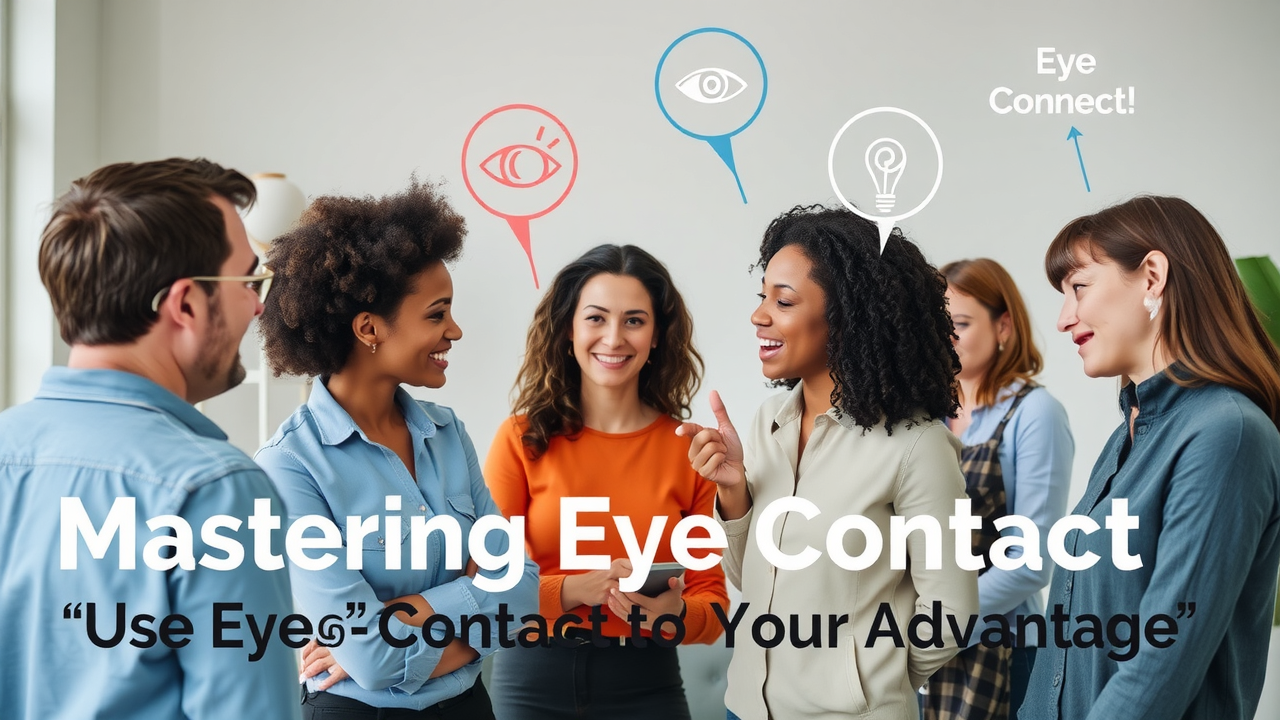
The Eyes Have it
The Art & Science of Eye Contact: Why 60-70% is the Sweet Spot 👀
Ever wonder why some conversations just click while others feel flat? It might come down to something as simple as eye contact. According to a fascinating 2013 study from Quantified Communications, a communications-analytics firm in Austin, Texas, the “sweet spot” for eye contact in conversations is 60-70% of the time. That’s right ...locking eyes for just the right amount of time can build trust, spark connection, and make you come across as engaged without being too intense. Let’s dive into what this means and how you can use it to level up your communication game. 😎
What the Research Says
Quantified Communications analyzed data from ~3,000 people and found that most of us naturally maintain eye contact for only 30-60% of a conversation. But here’s the kicker: bumping that up to 60-70%—through a series of meaningful, natural glances rather than a creepy stare-down—creates the perfect balance. It signals confidence, attentiveness, and emotional connection without making the other person feel uncomfortable. This range is often distilled into the “50/70 rule” in popular advice: aim for about 50% eye contact when speaking and 70% when listening. The result? A conversation that feels authentic and engaging.
This aligns with broader studies on nonverbal communication, like those from Michigan State University, which show that mutual gaze in natural settings (like chatting with acquaintances) hovers around 60%. It’s not just about looking at someone—it’s about creating a rhythm where both people feel seen and understood.
Why It Matters
Eye contact is a universal language. It says, “I’m here, I’m present, I care about what you’re saying.” Too little (below 30%), and you might seem distracted or disinterested. Too much (above 80%), and you risk coming off as aggressive or intimidating. That 60-70% range is where the magic happens—it’s enough to build rapport but leaves room for natural breaks to avoid awkwardness. Think of it like a conversational dance: you lock eyes, hold the moment, then glance away briefly to keep things comfortable.
But It’s Not One-Size-Fits-All
Here’s where it gets interesting: context and culture matter. In some cultures, like in parts of East Asia, prolonged eye contact can be seen as disrespectful or overly forward, while in Western cultures, it’s often a sign of confidence. Even within the same culture, the setting changes things—60-70% might be perfect for a heart-to-heart with a friend but could feel excessive in a casual chat with a stranger. And let’s not forget personality differences: some people are just more comfortable with direct gaze than others.
How to Nail the Sweet Spot
Want to put this into practice? Here are a few tips to hit that 60-70% mark without overthinking it:
•Use the “triangle” trick: Shift your gaze between the person’s eyes and mouth to keep things natural and avoid staring.
•Break every 4-5 seconds: Glance to the side or down briefly to give both of you a breather.
•Mirror their energy: If they’re maintaining strong eye contact, match it within the 60-70% range. If they’re more reserved, dial it back slightly.
•Listen with your eyes: When they’re speaking, lean into that 70% to show you’re fully engaged.
•Smile softly: Pairing eye contact with a warm expression amplifies the connection.
The Bigger Picture
While the 60-70% guideline is a great starting point, it’s not a hard-and-fast rule. Some critics point out that the Quantified Communications study, while insightful, isn’t peer-reviewed, and human interactions are too complex for a universal formula. Still, it’s a powerful benchmark backed by real-world observations and complementary research. Whether you’re in a job interview, on a first date, or just catching up with a friend, mastering eye contact can transform how others perceive you—and how connected you feel.
So, next time you’re in a conversation, try aiming for that 60-70% sweet spot. Notice how it changes the vibe. Have you ever thought about how much eye contact you make? Or maybe you’ve had a moment where someone’s gaze made you feel truly heard—or totally uneasy? Drop your thoughts below! 👇 Let’s talk about the power of eye contact and how it shapes our connections.